Projector Screen vs Smart TV: Which Wins?
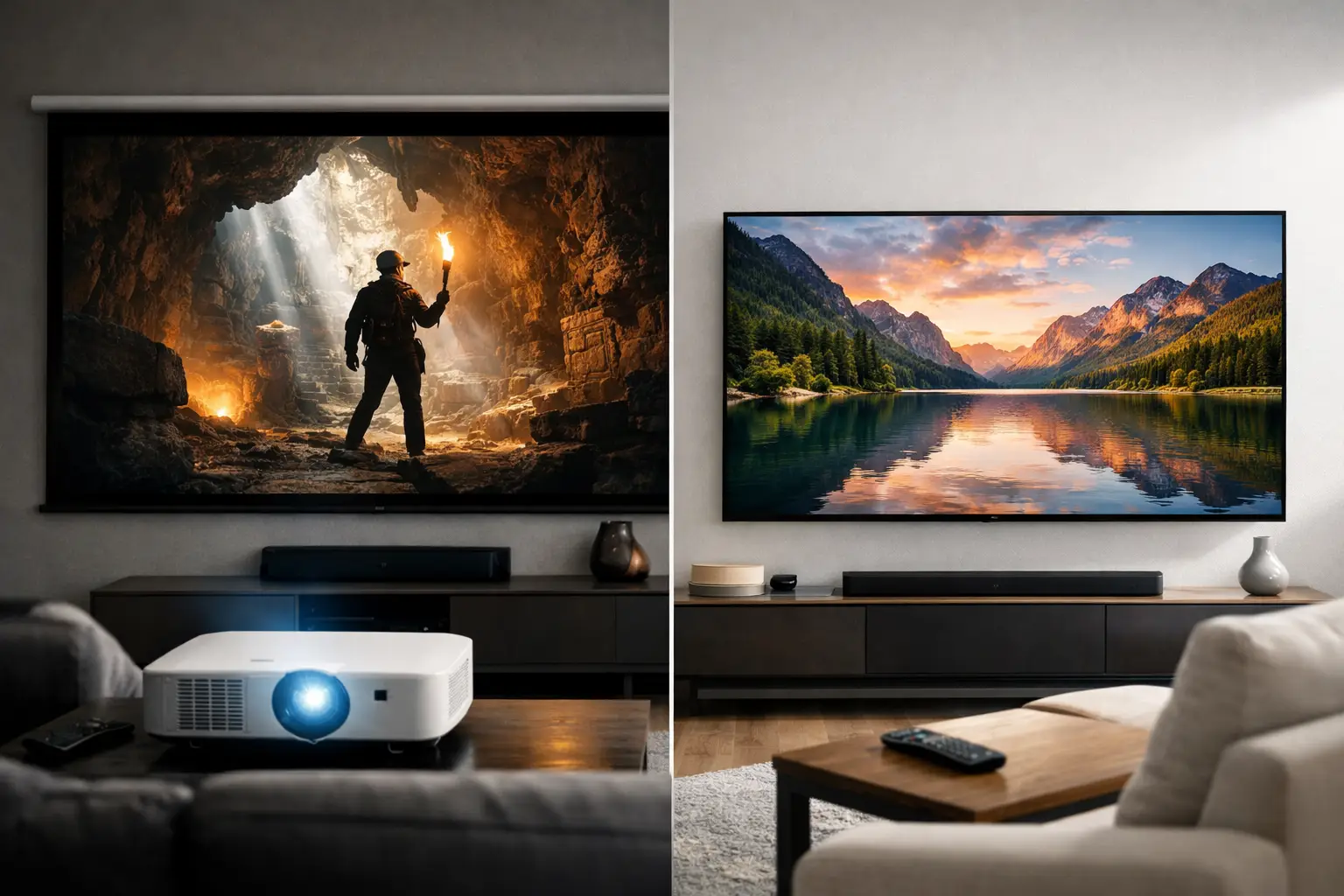
A 65-inch screen can feel generous until movie night starts and you want the room to disappear. That is where the projector screen vs smart tv decision becomes less about specs and more about how you want your home to feel. One option delivers cinematic scale with a tailored look. The other offers effortless brightness, convenience, and an all-in-one experience that suits daily life.
For design-conscious shoppers, this is not a small purchase. It shapes how a living room, media room, or apartment lounge performs every day. The right choice depends on your space, your viewing habits, and how much visual impact you want from the technology itself.
Projector Screen vs Smart TV: The Real Difference
At a glance, a smart TV is the simpler buy. It arrives ready to use, combines display and streaming features in one unit, and performs reliably in bright rooms. It is often the easiest path to better everyday entertainment.
A projector setup is more architectural. You are choosing a display method rather than a single product. That usually means a projector, a screen, careful placement, and some thought about lighting. The reward is scale. Even a modest projector setup can create an image that makes most TVs look restrained.
So the real difference is not just projector versus TV. It is flexibility and theater-style immersion versus plug-and-play convenience.
Picture Quality Depends on the Room
If your room gets a lot of daylight, a smart TV usually has the advantage. Modern TVs are bright, sharp, and consistent, even when sunlight slips through windows or lamps stay on in the evening. Sports, daytime streaming, and casual viewing all look cleaner with less effort.
A projector can look extraordinary, but it is more dependent on environment. In a darker room with a proper screen, the image feels rich, expansive, and undeniably more cinematic. In a bright room without light control, even a strong projector may look washed out compared with a quality TV.
This is where many buyers make the wrong comparison. They compare a projector in poor conditions against a TV in ideal ones. A projector is not automatically worse. It simply asks more of the space.
Black levels, contrast, and color
For deep blacks and strong contrast in typical living conditions, many smart TVs still lead. Premium TV panels can deliver dramatic shadow detail and punchy HDR that holds up in mixed lighting.
Projectors can produce beautiful color and convincing contrast, especially in dedicated media rooms, but results vary more based on screen material, projector technology, and ambient light. If you care about a refined film-night atmosphere and can control the room, a projector becomes far more compelling.
Size Changes the Experience
This is where projectors make their strongest case. A large image does not just look bigger. It changes how the room works emotionally. Films feel more event-driven. Gaming feels more immersive. Big-screen sports actually feel big.
A smart TV can still be impressive, especially in the 65-inch to 85-inch range, but there is a threshold where TV size becomes expensive, heavy, and visually dominant in the room even when turned off. A projector screen can disappear more gracefully, especially if you choose a retractable or well-integrated setup.
For shoppers who want elevated living without sacrificing drama, this matters. A projector setup can feel more bespoke. It creates a luxury-media effect that reads as intentional rather than oversized.
Smart TV Wins on Everyday Ease
Convenience is where the smart TV keeps earning its place. Setup is faster. Audio integration is usually simpler. Built-in apps, remote controls, voice assistants, and fewer placement issues make daily use frictionless.
If you watch the news in the morning, stream a series at lunch, and leave something on while cooking dinner, a TV fits that rhythm better. It turns on instantly, performs well in almost any room, and asks very little from the user.
A projector setup can be wonderfully polished, but it often includes extra layers. You may need a streaming device, external speakers, careful cable management, and occasional alignment adjustments. None of that is a dealbreaker, but it is not as effortless.
Noise and maintenance
This point often gets overlooked. TVs are quiet and low-maintenance. Projectors may include fan noise, lamp or light-source considerations, and more cleaning awareness depending on the model and placement.
For many buyers, that is a fair trade for a larger image. For others, especially in multipurpose spaces, the simplicity of a TV feels more refined in practice.
Design and Space Matter More Than People Expect
In smaller homes and apartments, the answer is rarely universal. A smart TV is easier to place, easier to move, and easier to live with if your room serves multiple functions. It is the practical luxury option – sleek, self-contained, and dependable.
A projector can actually be the more elegant visual solution when the goal is a less cluttered room. Mounted correctly or paired with a retractable screen, it keeps a large black rectangle from dominating the wall. That appeals to shoppers who care as much about interior style as entertainment.
Still, the room layout needs to cooperate. Throw distance, wall space, seating, ceiling height, and light control all influence success. If your space is tight or awkward, a TV may deliver better results with fewer compromises.
Cost Is Not as Straightforward as It Looks
A smart TV often looks like the more predictable purchase because the full system is bundled into one product. You know the screen size, the features, and the likely add-ons.
With projectors, pricing can shift quickly. A projector may seem affordable at first, but once you add a quality screen, audio, mounting, or furniture adjustments, the total climbs. On the other hand, if you want a truly massive display, a projector can be the more cost-effective route compared with buying a very large premium TV.
So value depends on screen size expectations. If you are comparing a projector setup to a mid-sized TV, the TV may feel more sensible. If you want a theater-scale image, the projector starts making financial sense.
Who Should Choose a Projector?
A projector is a strong choice if you care about atmosphere, scale, and a more customized home cinema look. It suits buyers who want movie nights to feel special, who have decent light control, and who do not mind putting more thought into the setup.
It also works well for people designing a media room from the ground up. In that setting, a projector can feel less like a gadget and more like part of the home itself. The result is elevated, immersive, and distinctly premium.
If that sounds like your style, a curated retailer such as Alucarda can make the upgrade feel less fragmented by helping you shop with design and performance in mind rather than chasing random components.
Who Should Choose a Smart TV?
A smart TV is the stronger fit for most daily-use living rooms, family spaces, and apartments. It favors people who want excellent picture quality with minimal effort. It also makes sense for households with mixed viewing habits, from kids’ shows and casual streaming to gaming and live sports.
There is also a polish to modern TVs that should not be underestimated. Ultra-thin profiles, crisp brightness, and streamlined interfaces deliver a premium experience without requiring the room to revolve around the technology.
Projector Screen vs Smart TV for Gaming and Sports
For gaming, the better choice depends on what you play. Fast, competitive gaming usually feels better on a smart TV because response times and refresh performance are easier to optimize. You get immediacy, brightness, and less setup complexity.
For cinematic single-player titles, a projector can be unforgettable. The scale adds impact in a way smaller displays cannot replicate. Just make sure the projector you choose can keep up with your performance expectations.
For sports, TVs are usually more forgiving. Day games, bright rooms, and constant motion all favor a bright, sharp display that does not depend on blackout curtains. A projector can still be great for game-day gatherings, but the room has to support it.
The Better Question Is How You Live
The smartest buyers do not ask which technology is best in the abstract. They ask which one fits the rhythm of their home. If your ideal evening includes lowered lights, intentional viewing, and a room that feels like a private screening space, a projector setup is hard to beat. If your home entertainment needs to be immediate, bright, flexible, and beautiful every day, a smart TV keeps winning.
The luxury is not in choosing the more expensive option. It is in choosing the one that makes your space feel complete. Buy for the room you actually live in, and the right screen will make itself obvious.










Leave a comment