Are Portable Projectors Worth Buying?
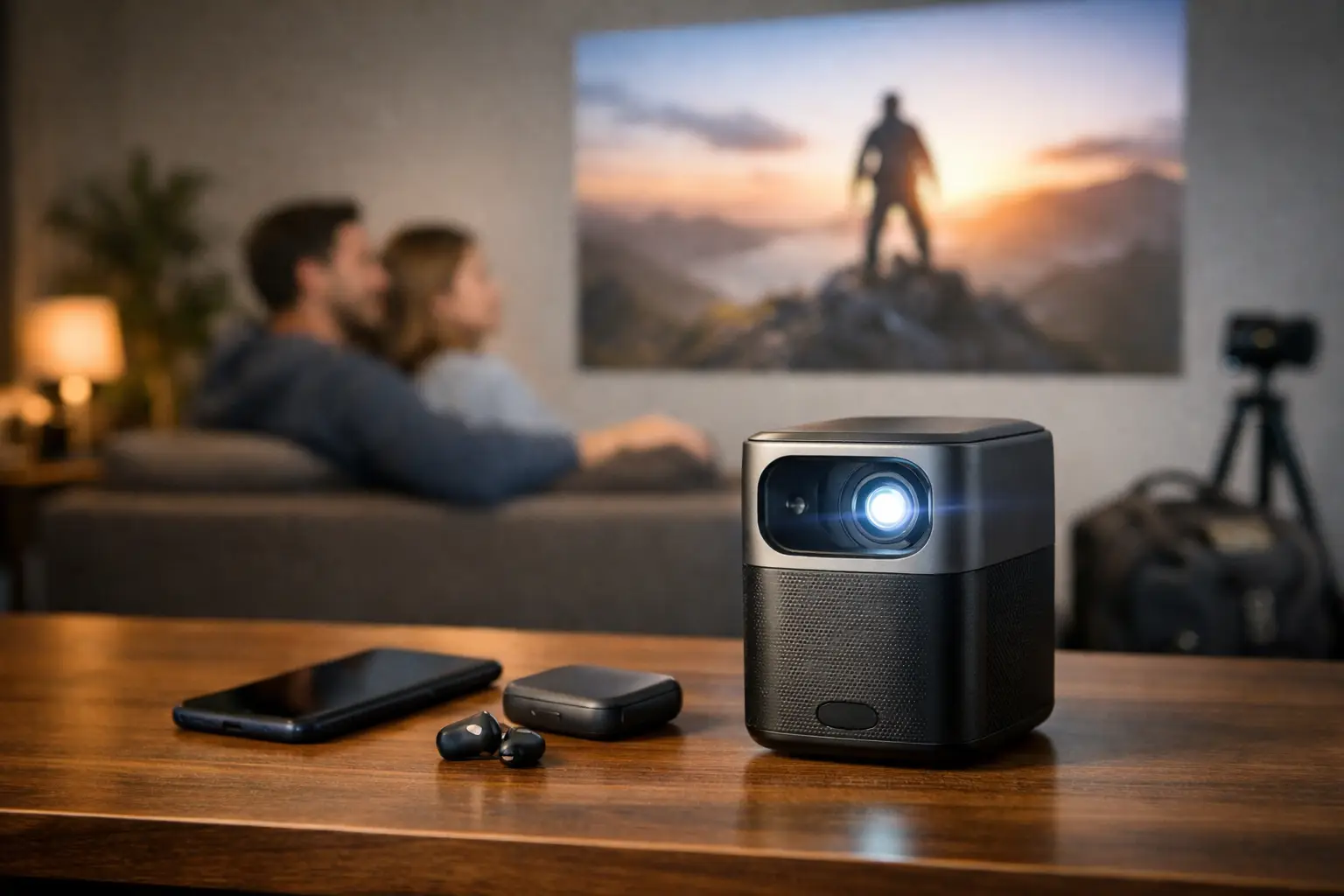
Movie night looks very different when the screen is not tied to one wall. A compact projector can turn a bedroom ceiling, backyard fence, or blank living room wall into an entertainment setup in minutes. That convenience is exactly why so many shoppers ask, are portable projectors worth buying, or are they just another clever gadget with too many compromises?
The honest answer is that they can be absolutely worth it, but only for the right kind of buyer. Portable projectors are not a direct replacement for every TV, and they are not all built to the same standard. When chosen well, they offer a refined mix of flexibility, design-friendly minimalism, and cinematic atmosphere that a traditional screen setup often cannot match.
Are portable projectors worth buying for everyday use?
If you want one device to handle every kind of viewing in every lighting condition, a portable projector may disappoint you. Even premium portable models usually cannot match the brightness, instant clarity, and all-day practicality of a quality television. In a bright family room at noon, a TV still wins.
Where portable projectors shine is in the experience they create. They feel less fixed, less bulky, and far more adaptable to modern living. For apartment dwellers, design-conscious homeowners, and anyone who prefers a cleaner room without a dominant black screen on display, that matters. A projector can be packed away after use, moved between rooms, or taken outside for a more elevated evening setup.
That flexibility makes portable projectors especially appealing for people who do not want their entertainment system to dictate the entire look of a space. In smaller homes, multi-use rooms, and outdoor settings, they often feel smarter than a second TV.
What makes a portable projector worth the price
The strongest case for buying one comes down to size, atmosphere, and versatility. A portable projector can deliver a surprisingly large image from a compact body, which is hard to ignore if you care about immersion. Watching a film at 100 inches on a patio wall simply feels more special than watching the same film on a bedroom TV.
There is also a practical elegance to them. Many newer models include built-in speakers, wireless casting, smart interfaces, autofocus, and battery power. That means fewer cables, less setup friction, and a more polished user experience. For buyers who want tech that feels sophisticated rather than cluttered, those details count.
Portable projectors also fit a lifestyle shift that many shoppers now prefer. People want products that move with them, adapt to the moment, and deliver more than one use case. A single projector can handle movie nights, gaming sessions, casual streaming in bed, presentations, travel, and outdoor gatherings. That range gives it value beyond pure specs.
Where portable projectors fall short
This is where expectations need to stay grounded. Portability almost always involves compromise. Smaller projectors often sacrifice brightness, speaker depth, or contrast performance to stay compact. Some battery-powered units are convenient but not powerful enough for truly vivid daytime viewing.
Audio is another common weak point. Built-in speakers may be fine for casual watching, but if you care about rich sound, you may still want a Bluetooth speaker or soundbar. That adds another step, which matters if your goal was total simplicity.
Resolution can also be misleading. Some portable projectors advertise support for 4K content, but their native resolution is still lower. That does not automatically make them bad, but it does mean the image may not look as sharp as shoppers expect from the marketing. A premium-looking product is not always a premium-performing one.
Then there is the room itself. Projectors depend heavily on environment. Wall color, ambient light, throw distance, and screen quality all influence the final picture. If you want plug-and-play perfection in any setting, that is usually a television conversation, not a portable projector one.
Who should buy a portable projector
Portable projectors make the most sense for buyers who value flexibility as much as image quality. If you host occasionally, love outdoor evenings, move between rooms, or want a cleaner entertainment setup, they can feel like a beautifully modern upgrade.
They are also ideal for people furnishing a first apartment or styling a guest room where a full entertainment center feels excessive. Instead of dedicating furniture and wall space to a large TV, you keep the room visually lighter and bring out the projector when you actually want the experience.
They can also be a strong choice for families. A projector for backyard movie nights, sleepovers, or holiday gatherings creates a sense of occasion that feels more memorable than standard screen time. That emotional value is hard to measure in specs, but it is often what makes the purchase feel worthwhile.
For frequent travelers, van-life enthusiasts, or buyers who enjoy gear that adapts to different environments, portability is the whole point. In those cases, the trade-offs are not flaws. They are part of the design brief.
Who may be better off with a TV
If your main priority is watching sports during the day, keeping news on in a bright kitchen, or using one screen for hours of daily content, a TV is usually the stronger investment. It is easier, brighter, and more dependable across changing conditions.
The same goes for shoppers who care deeply about top-tier image performance without any setup adjustment. A projector asks a little more from the user and from the room. If that sounds annoying rather than exciting, you already have your answer.
Gaming can also be mixed. Some portable projectors perform well for casual play, but competitive gamers should pay close attention to input lag and refresh rate. A large image is thrilling, but not if responsiveness suffers.
How to tell if a model is actually good
Not every portable projector deserves a place in a premium home setup. The best ones balance mobility with real-world performance, and that starts with brightness. If you plan to use your projector in anything other than a dark room, brightness is not a luxury feature. It is essential.
Look closely at native resolution rather than just supported resolution. A projector with true Full HD will generally deliver a better everyday image than one that markets itself aggressively but relies on softer internal specs. Contrast, color accuracy, and automatic keystone correction also matter more than many shoppers expect.
Battery life should be judged realistically. A model that runs for 90 minutes may work for short videos but not for a full movie night. If portability matters but battery limits are tight, make sure plugged-in use still fits your intended setup.
Connectivity deserves attention too. Built-in streaming platforms can be convenient, but they are not always the fastest or most polished. HDMI, USB, Bluetooth audio support, and reliable wireless casting tend to matter more over time.
Finally, think about design. A portable projector often lives in visible spaces, travels between environments, and gets handled more often than a fixed home theater unit. Build quality, finish, and thoughtful form factor are part of the value. For style-aware shoppers, function and presentation should work together.
Are portable projectors worth buying instead of a home theater setup?
Not if your goal is a dedicated cinema room with the highest picture and sound performance your budget allows. A traditional home theater projector still offers more scale, more tuning potential, and often more visual power.
But that comparison is not always fair. Portable projectors are not trying to be permanent theater installations. They are designed for elegant convenience. They suit the buyer who wants cinema energy without giving up flexibility, floor space, or visual calm at home.
That distinction matters. A portable projector is best understood as a lifestyle tech purchase, not just a display purchase. It blends entertainment with mobility, design, and atmosphere. For the right buyer, that combination feels far more luxurious than a fixed screen ever could.
The real value comes down to how you live
So, are portable projectors worth buying? Yes, if you want a flexible, space-conscious way to create a larger and more memorable viewing experience without committing to a permanent screen. No, if you expect TV-level brightness, zero setup friction, and elite performance in every condition.
The smartest purchase happens when the projector matches your rhythm of living. If your idea of home includes adaptable spaces, elevated hosting, and tech that feels as stylish as it is useful, a well-chosen portable projector can be a genuinely satisfying upgrade. Alucarda shoppers, in particular, tend to appreciate products that blend function with refined living, and this category does exactly that.
Choose for the room you have, the moments you want to create, and the experience you actually value. That is where the purchase starts to make sense.










Leave a comment