Best 4K Projector for Home Theater
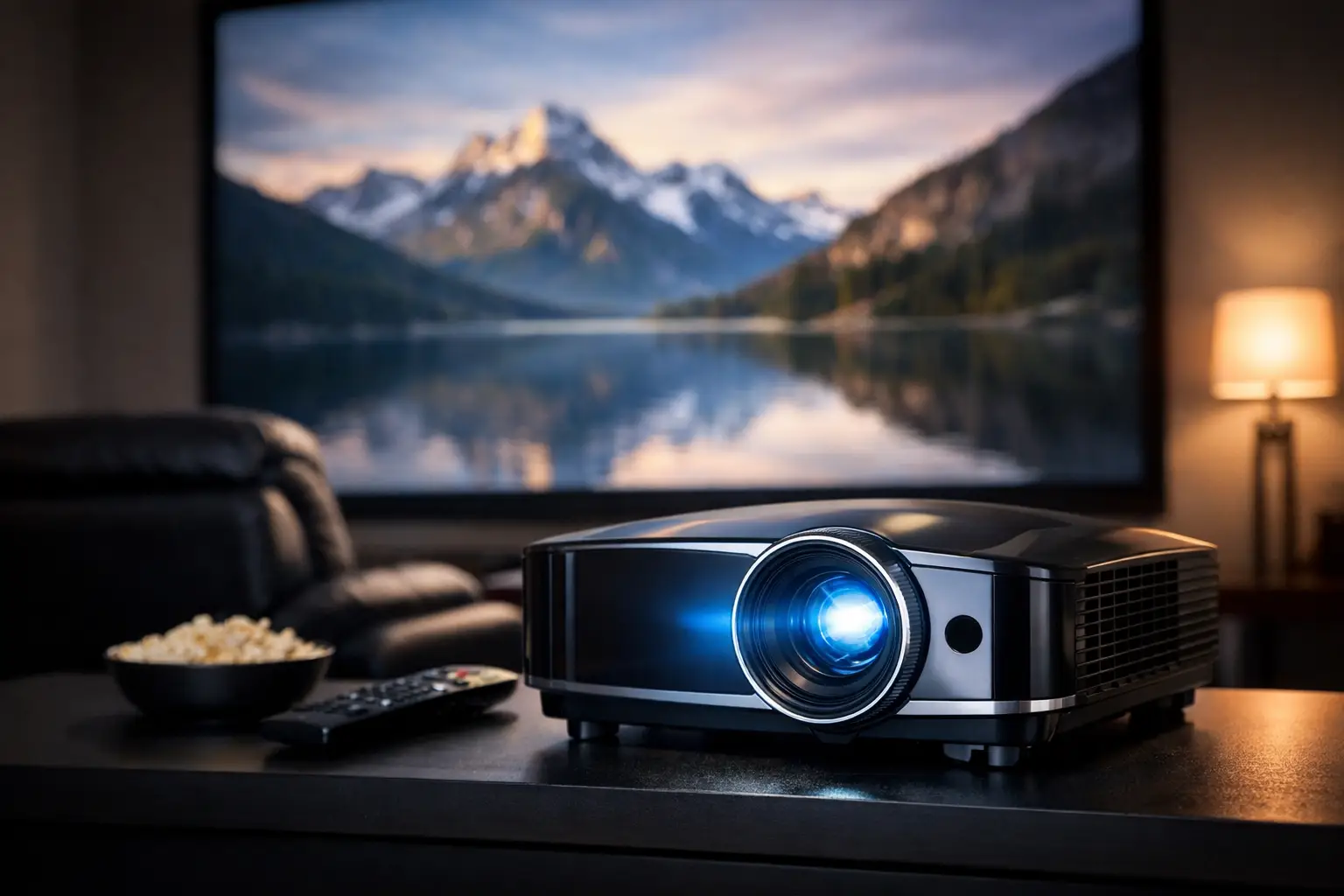
Movie night falls apart fast when the picture looks washed out, the blacks turn gray, or the projector hums louder than the dialogue. A great 4k projector for home theater should feel cinematic the moment the lights go down – rich contrast, convincing detail, and a screen size that makes a living room feel purpose-built.
That promise is what draws so many buyers into the category, and it is also where confusion starts. Not every projector marketed as 4K delivers the same kind of image, and not every premium model is right for every room. The best choice depends on how you watch, where you watch, and how much refinement you want from the full setup.
What makes a 4K projector for home theater worth buying
A home theater projector earns its place when it does more than just throw a big image on the wall. Size alone is easy. What matters is whether that larger image still looks composed, dimensional, and polished when you are watching a dark thriller, a bright sports broadcast, or a prestige series with subtle shadow detail.
Resolution is part of that equation, but it is not the whole story. A 4K-capable projector can reveal fine texture in skin, fabric, architecture, and landscapes, which is exactly what gives modern content that premium, high-production feel. Yet if the contrast is weak, the lens is average, or the color performance drifts, the image can still look flat. For home theater use, the real luxury is balance – crisp detail, convincing black levels, stable motion, and color that feels rich instead of exaggerated.
This is why shoppers upgrading from a TV often have a brief moment of surprise. A projector delivers scale and atmosphere in a way a television rarely can, but it asks more from the room. Ambient light matters. Screen choice matters. Placement matters. When those variables are handled well, the result is less like casual viewing and more like bringing a private screening room into your home.
Native 4K vs pixel-shifted 4K projector for home theater setups
One of the first distinctions worth understanding is native 4K versus pixel shifting. Native 4K models use imaging chips with a full 4K pixel count built in. These are typically positioned higher in the market and are often associated with stronger optics, better processing, and more serious theater performance.
Pixel-shifting models take a lower native resolution and shift pixels rapidly to create a 4K-like image on screen. That may sound like a compromise, but in many rooms it is a smart one. A well-executed pixel-shifting projector can look excellent from normal seating distances, especially with strong HDR handling and good contrast.
The trade-off is straightforward. If you are building a dedicated theater, sitting fairly close, and care deeply about absolute image precision, native 4K can justify the premium. If you want a more attainable path to a luxurious large-screen experience, pixel-shifting often delivers the better value.
Brightness, contrast, and why specs do not tell the full story
Brightness gets a lot of attention because it is easy to compare on a product page. More lumens sounds better, especially for living rooms or media spaces that are not fully dark. But brightness without contrast can produce an image that looks forceful rather than cinematic.
For a home theater setup, contrast is often the characteristic that separates a merely large picture from a memorable one. Deep blacks and controlled shadow detail give the image depth. They also make highlights feel more dramatic. In a dim room, a projector with better contrast frequently looks more premium than one that simply blasts more light.
There is also the issue of how manufacturers measure brightness. Real-world performance can differ from headline numbers, especially in the most accurate picture modes. A buyer choosing between two models should think in terms of room conditions. If your space has light control, prioritize contrast and black levels. If your room doubles as a family room with daytime use, added brightness becomes more valuable.
Room size, throw distance, and screen pairing
A projector should fit the room as elegantly as any piece of furniture or lighting. That means paying close attention to throw distance, which determines how far back the projector needs to sit to create your desired screen size. This is one of the most overlooked buying mistakes.
Some projectors need substantial distance to create a 100-inch or 120-inch image. Others are short throw or ultra short throw designs intended for tighter spaces. For apartment dwellers, open-plan living rooms, or anyone who wants a cleaner installation, these formats can be especially attractive.
The screen itself has a major effect on performance. Even a refined projector can look underwhelming on the wrong surface. A proper screen improves uniformity, brightness, and perceived contrast. In brighter rooms, an ambient light rejecting screen may be worth the investment. In a dedicated dark room, a traditional matte white screen can preserve a more natural image. The point is not to treat the projector as a standalone purchase. The theater experience comes from the system working together.
Features that matter more than marketing extras
It is easy to get distracted by long feature lists, but a few capabilities matter more than most. HDR support is a key one, although projector HDR performance is not identical to what you may know from premium TVs. A projector has different brightness limitations, so tone mapping becomes critical. Better tone mapping helps preserve highlight detail while keeping darker scenes watchable instead of murky.
Lens shift, zoom range, and keystone adjustment also deserve attention, though they are not equally desirable. Lens shift is valuable because it helps with placement while preserving image quality. Keystone correction is convenient, but heavy reliance on it can degrade the picture. In a premium setup, cleaner physical placement is usually the better route.
Input lag matters if gaming is part of the plan. Not every home theater buyer cares, but for households that want movie-night grandeur and console performance from one device, this can be a deciding factor. Likewise, built-in speakers may help in a casual environment, but they are rarely the final answer for serious cinema sound. A projector can create the image. The immersion still depends on a sound system with enough scale to match it.
Choosing the right style of projector for your space
There is no single best 4k projector for home theater buyers across every room and budget. The right choice depends on the kind of luxury you are after.
A dedicated theater room benefits from a projector that prioritizes contrast, black levels, optical quality, and precise image controls. This is where cinephiles tend to spend more, because the room lets those strengths shine.
A living room setup often calls for a brighter, more flexible projector with easier placement and a design that feels more integrated into daily life. In these spaces, convenience can be part of the premium experience. An ultra short throw projector placed near the wall may look cleaner and feel more practical than a ceiling-mounted unit.
For buyers balancing aesthetics, performance, and value, the sweet spot is often a mid-to-upper-tier model with strong HDR processing, dependable brightness, and installation flexibility. That kind of projector does not chase spec-sheet bragging rights. It simply performs well where most people actually live.
What to expect at different price levels
Entry-level 4K projectors can be appealing, but expectations should stay grounded. You may get a large, sharp image, yet black levels, motion handling, or color refinement might fall short of a true theater feel. These models can still be satisfying in mixed-use spaces, especially if your priority is size over precision.
Midrange models are where many of the strongest values live. This tier often introduces better color accuracy, stronger processing, quieter operation, and more polished build quality. For many shoppers, this is the category that starts to feel genuinely elevated.
Higher-end models tend to justify their cost through subtle but meaningful gains. Better optics, deeper contrast, cleaner gradients, and more convincing HDR all add up over long viewing sessions. If you care about film presentation and want your setup to feel curated rather than improvised, this level can be worth it.
For design-conscious shoppers building a refined entertainment space, the best purchase is rarely the cheapest box with a 4K label. It is the model that aligns with the room, the seating distance, the light conditions, and the level of finish you expect from everything else in your home. That is where a premium retailer perspective becomes useful. A well-chosen projector should not just fill a wall – it should elevate the way the whole room feels.
The smartest approach is to picture the experience first: the room dimmed, the image spanning the screen, the sound rising to meet it, and the equipment fitting your space with intention. When a projector supports that vision instead of fighting it, you are not just buying display technology. You are investing in a more cinematic way to live at home.











Leave a comment