AI Creator Tools Trends Changing Creative Work
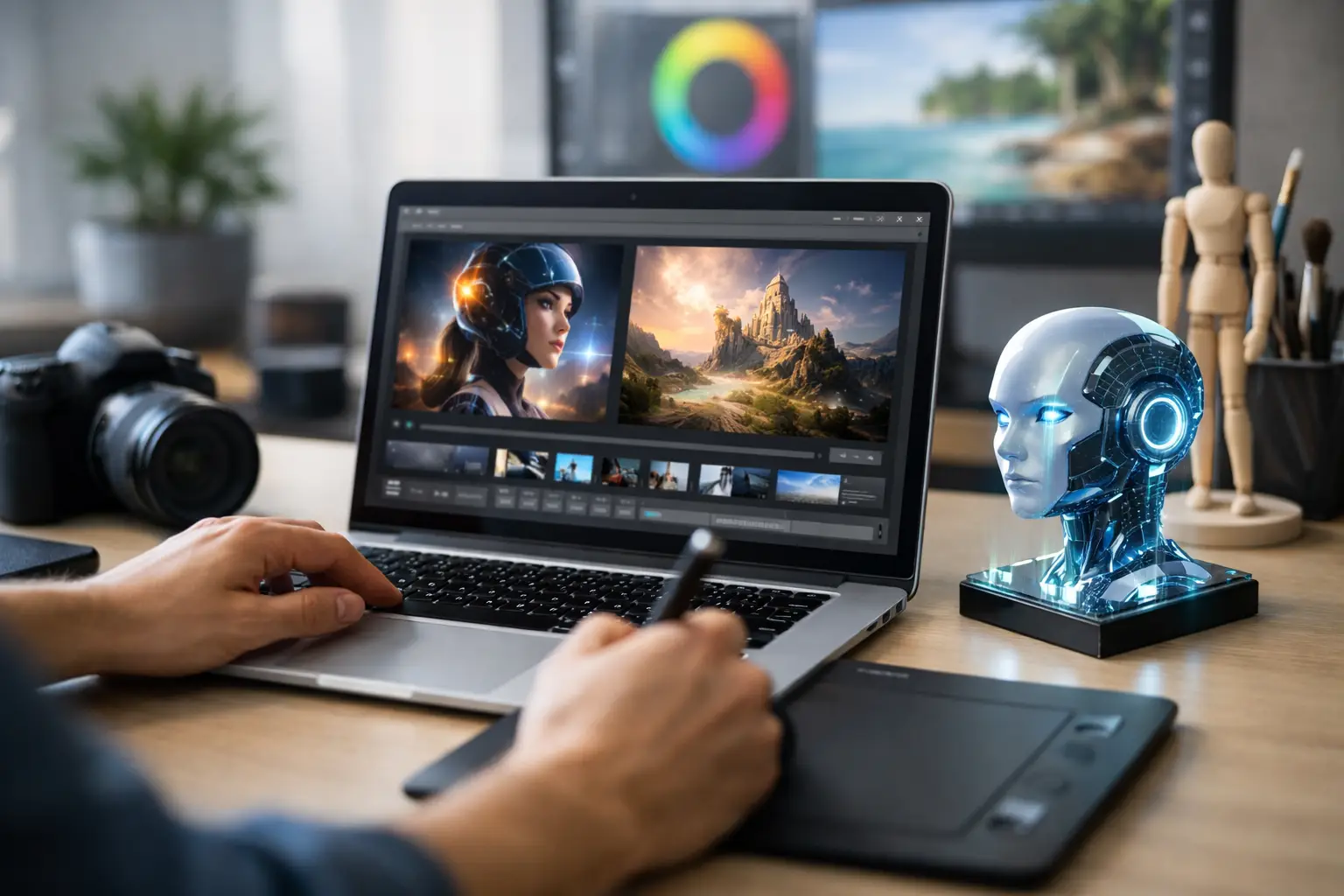
A product launch once required a copywriter, designer, photographer, editor, and a calendar full of coordination. Now, a solo seller can develop a campaign concept, generate visual directions, edit short-form video, and refine product copy in a single afternoon. That shift is why AI creator tools trends deserve attention from anyone building a brand, growing an audience, or simply trying to make their work look more polished.
The most interesting change is not that artificial intelligence can make content. It is that creative production is becoming more available, more iterative, and more dependent on taste. The tools can accelerate the first draft. They cannot decide whether a room feels considered, whether a product story earns trust, or whether a visual belongs in a premium brand world.
AI Creator Tools Trends Are Moving Beyond Novelty
Early AI tools earned attention for surprising outputs: a strange image, a clever paragraph, a synthesized voice. The current generation is being judged by a more practical standard: can it reduce friction without lowering the standard of the work?
For creators, freelancers, and small business owners, the answer is increasingly yes. Writing assistants can turn rough product notes into organized descriptions. Image-generation tools can explore lighting, composition, color palettes, and editorial concepts before a shoot is booked. Video tools can remove pauses, create captions, resize footage for multiple platforms, and speed up the edit that often holds a project back.
That does not mean every output is ready to publish. AI can produce generic language, inconsistent product details, unnatural hands, awkward typography, and visuals that look impressive for half a second but fall apart under closer inspection. The advantage lies in treating the tool as a capable studio assistant, not an unattended creative director.
For a lifestyle-focused business, that distinction matters. Premium presentation depends on restraint. A beautifully designed patio structure, an elegant air fryer, or a thoughtfully selected smart-home device should feel like part of a larger point of view. Fast content is useful. Fast content that looks interchangeable is not.
From Single Tools to Connected Creative Workflows
The strongest trend is the move away from isolated AI experiments. Creators are building workflows in which research, ideation, production, and distribution connect.
A practical example starts with a product. A creator can use an AI research assistant to identify common buyer questions and compare messaging angles. A writing tool can shape those insights into a product brief. An image tool can produce mood-board directions for a campaign. A video editor can turn a short demonstration into versions for social posts, ads, and email. The finished work still needs human review, but the handoffs become much lighter.
This connected approach is especially valuable for people with broad responsibilities. The owner of a growing online shop may be handling merchandising in the morning, customer questions at midday, and content planning at night. A tool that saves ten minutes in one task may not matter much. A workflow that saves ten minutes across six repeated tasks changes what is possible in a week.
The trade-off is complexity. Adding five subscriptions and ten automations can create its own form of clutter. A refined setup usually begins with one tool for words, one for visuals or video, and one place to organize ideas and assets. Expand only after the first tools are genuinely part of the routine.
The New Creative Skill Is Direction
Prompting is often framed as a technical trick. In practice, the better skill is direction. Clear instructions reflect clear thinking.
Instead of asking for “a luxury kitchen ad,” a creator who understands the brand can specify the product, audience, setting, mood, materials, lighting, composition, and words to avoid. The request becomes more useful because the vision is more useful. AI rewards specificity, but it also exposes vague positioning quickly.
This is good news for design-conscious shoppers and entrepreneurs. Taste is becoming more valuable, not less. The ability to recognize a convincing visual, edit a weak headline, or reject a trend that does not fit your audience is the real differentiator. Software can offer a hundred options. Judgment selects the one worth keeping.
Short-Form Video Is Becoming the Default Showcase
Video remains one of the clearest places to see AI creator tools trends in action. The barrier to making useful video has dropped sharply. Automated captioning, script assistance, voice cleanup, scene detection, background replacement, and intelligent reframing help creators turn simple footage into a more finished asset.
For commerce, this matters because shoppers want to see products in context. A projector is easier to imagine after a quick living-room setup. Pet accessories are more persuasive when shown in use. Outdoor gear earns attention when viewers can see scale, storage, movement, and material details rather than a static listing alone.
Still, authenticity has a ceiling. AI-generated presenters and fully synthetic product scenes may be appropriate for concept testing, explainers, or imaginative campaigns. They are riskier when customers need an accurate understanding of what they will receive. Product dimensions, finishes, features, and performance should be represented honestly. A refined brand protects its reputation by making reality look its best, not by replacing it with fiction.
Personalization Is Getting More Useful, and More Sensitive
Another major development is the rise of personalized content. AI can help adapt a message for first-time buyers, returning customers, apartment dwellers, homeowners, pet owners, or people shopping for a distinctive gift. Done well, this feels thoughtful: the right product story appears at the right moment, with details that actually matter to that shopper.
Done poorly, personalization feels invasive or careless. A customer does not need to feel watched to feel understood. Brands should be measured with customer data, transparent about how information is used, and conservative when assumptions could be wrong.
The same principle applies to generated recommendations. AI can surface useful pairings, such as an outdoor seating concept alongside lighting or a home-office upgrade alongside organization essentials. But recommendations should support discovery, not pressure customers into a cluttered cart. Curation is part of luxury. More choices are not always better choices.
What Creators Should Protect
Speed can make creators less deliberate if they are not careful. Before publishing AI-assisted work, protect the elements that make your work credible: accurate claims, original perspective, consistent visual identity, and respect for intellectual property.
Do not assume that generated text is factually correct, especially when it involves product specifications, health-related statements, pricing, legal guidance, or comparisons. Review images for visible errors and for accidental similarities to recognizable brands or artists. Keep records of the source materials and approvals behind commercial work. These practices are not glamorous, but they separate a polished operation from a careless one.
It is also wise to preserve a human archive. Save your best campaign references, brand phrases, photography standards, customer questions, and merchandising insights. These are the materials that give AI tools meaningful direction. Without them, every new project starts from the same generic blank page.
Choosing Tools That Earn Their Place
The right tool depends on the work you repeat most often. A freelance writer may value research support and editing controls. A product-focused creator may prioritize image quality and video editing. A small retailer may need systems that help organize a content calendar, create variations, and maintain a clear approval process.
Before paying for a subscription, test a real assignment. Create one product description, one social post, one short video, or one campaign concept using the tool. Measure the time saved, the revisions required, the quality of the output, and whether your team can use it without constant troubleshooting. The most talked-about platform is not automatically the best fit for your workflow.
Alucarda’s world is built around the idea that practical purchases can still feel exceptional. That same standard applies to creative technology. Choose tools that make your ideas clearer, your content more useful, and your presentation more considered. Let automation handle the repetition, then reserve your attention for the details customers remember.













Leave a comment