Best Telescope for Amateur Stargazing
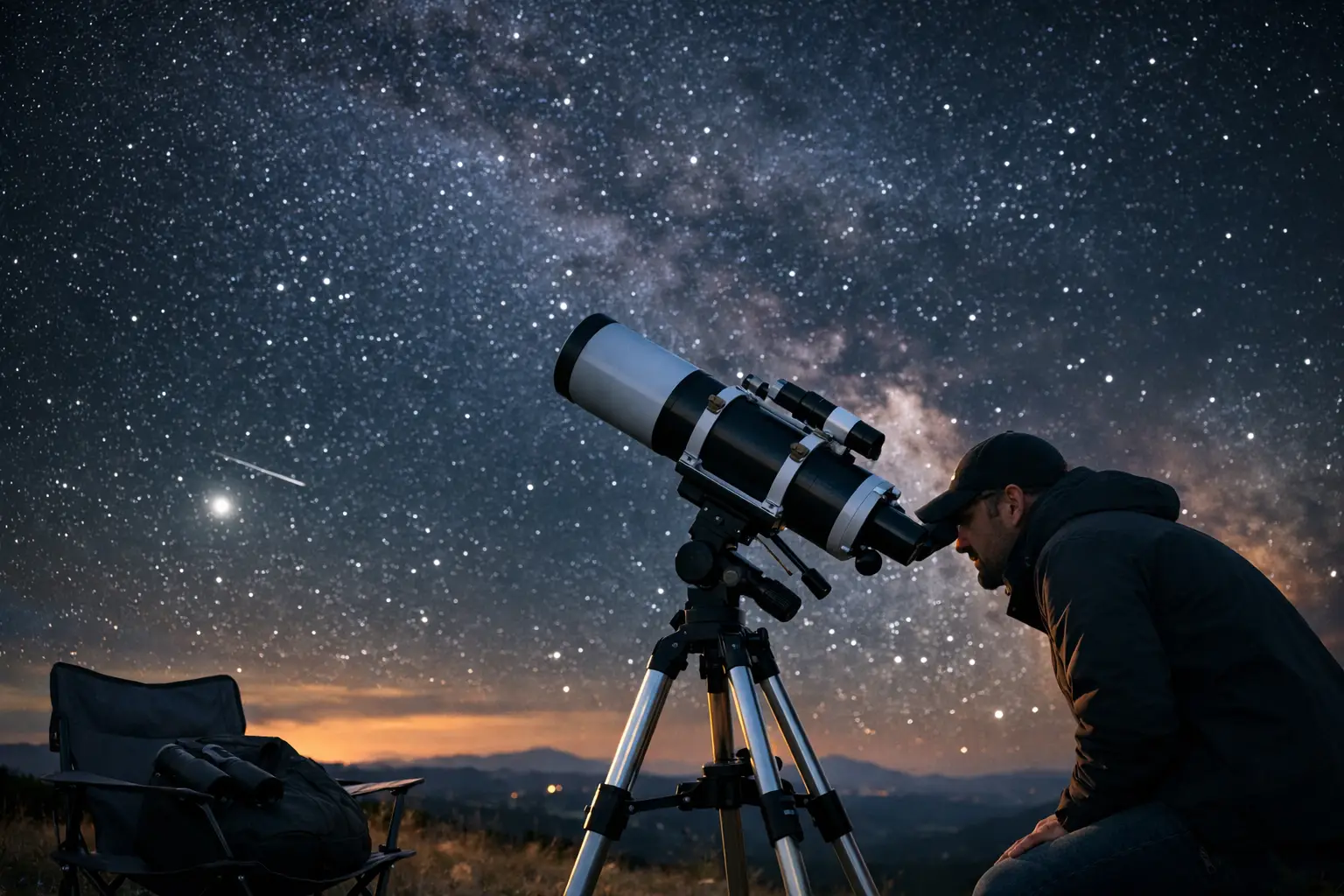
A clear night can make almost anyone stop scrolling and step outside. The right telescope for amateur stargazing turns that quick glance upward into something far more memorable – Saturn’s rings in sharp relief, lunar craters with real texture, or Jupiter’s moons lined up like tiny lanterns. The challenge is not whether a telescope is worth buying. It is choosing one that feels refined, capable, and enjoyable to use from the first night rather than frustrating after the first setup.
What makes a telescope for amateur stargazing worth buying?
For beginners, the best telescope is rarely the one with the most dramatic box claims. High magnification sounds impressive, but magnification alone does not create a better view. Aperture does. That is the diameter of the main lens or mirror, and it determines how much light the telescope can gather. More light means brighter, clearer detail on the Moon, planets, and many deep-sky objects.
A well-chosen telescope for amateur stargazing balances three things: optical quality, mount stability, and ease of use. If one of those is missing, the experience suffers. A powerful optical tube on a shaky tripod will feel cheap in practice. A highly technical model with complicated alignment features can sit unused if setup feels like a chore. The goal is not just access to the night sky. It is access with confidence and pleasure.
That is why thoughtful shoppers often do better with a simpler, higher-quality design than a feature-heavy bargain model. Premium value in this category comes from the viewing experience itself – cleaner images, smoother movement, and a build that feels intentional rather than disposable.
The three main telescope types beginners should know
There is no single perfect design for every household, balcony, backyard, or travel plan. Your best fit depends on how and where you plan to observe.
Refractor telescopes
Refractors use lenses and are often the most elegant-looking option. They are popular with beginners because they are low-maintenance, straightforward to use, and excellent for the Moon and planets. If your dream evening involves stepping onto a patio and getting a crisp lunar view in minutes, a refractor has strong appeal.
The trade-off is value at larger sizes. Bigger refractors can become expensive quickly, and budget versions with very small apertures may not deliver the wow factor many first-time buyers expect. Still, a well-made refractor can feel polished, reliable, and highly satisfying for casual home viewing.
Reflector telescopes
Reflectors use mirrors, which usually means you get more aperture for the price. That makes them a smart choice for shoppers who want stronger performance without moving into a luxury-level budget. They are especially compelling if faint galaxies, nebulae, and star clusters are on your wish list.
The trade-off is upkeep. Reflectors may need occasional collimation, which means aligning the mirrors. It is not difficult once learned, but it is one more ownership detail. For many enthusiasts, the extra light-gathering power is well worth it.
Catadioptric telescopes
These combine lenses and mirrors in a compact design. They are often more portable than they look and can be excellent all-around performers. If you want a telescope that feels sophisticated, stores neatly, and handles both planetary and deeper-sky observing, this category is appealing.
The trade-off is price. These models often sit higher in the market, but they reward buyers who want a more versatile, premium-style instrument that fits modern living spaces without dominating them.
How much aperture do you really need?
For most buyers searching for a telescope for amateur stargazing, aperture should guide the decision more than advertised power. A small telescope can still be enjoyable, especially for the Moon and bright planets, but the experience becomes richer as aperture grows.
Around 70mm to 90mm in a refractor can provide attractive entry-level performance. In reflectors, 114mm to 150mm is where many amateurs start feeling they have a serious instrument rather than a novelty. If you want clearer planetary detail and a more impressive introduction to deep-sky viewing, that extra light collection matters.
Still, bigger is not automatically better if the telescope becomes inconvenient. A large model that stays in storage because it is awkward to carry does less for your evenings than a smaller one you actually use. The sweet spot is a size that offers visible improvement while still feeling easy to set up after dinner or on a weekend trip.
Don’t overlook the mount
A refined telescope experience depends heavily on the mount. This is the part new buyers underestimate most.
An unstable mount makes focusing difficult and tracking objects irritating. Every touch sends the image shaking. That can make even a decent telescope feel disappointing. For amateur stargazing, a solid alt-azimuth mount is often the easiest place to start. It moves up, down, left, and right, which feels natural and intuitive.
Equatorial mounts have advantages, particularly for tracking the sky’s motion more precisely, but they come with a learning curve. If your main goal is relaxed visual observing rather than astrophotography, simple often wins. Smooth manual controls and a stable tripod can elevate the entire experience more than flashy electronics.
Computerized go-to mounts can also be attractive, especially for urban users dealing with light pollution. They help locate objects you might otherwise miss. The trade-off is cost, power requirements, and setup time. Some people love the convenience. Others prefer the tactile pleasure of learning the sky by hand.
Features that matter more than marketing claims
A premium-feeling telescope does not need every extra. It needs the right extras.
Good eyepieces matter because they shape what you actually see. A telescope bundled with poor eyepieces may underperform until upgraded. A red-dot finder or optical finder also helps more than people expect, since locating objects is half the battle on early nights. Slow-motion controls, a sturdy focuser, and a tripod that does not wobble are all signs of a better investment.
What should make you cautious? Extremely high magnification claims, oversized accessory bundles, and ultralow prices attached to ambitious promises. Those combinations often signal compromise in the optics or mount. In this category, measured performance beats inflated marketing every time.
Matching the telescope to your lifestyle
The best buying decision is the one that fits your home and habits. A city apartment resident with a small balcony has different needs than a suburban homeowner with open yard space. A parent shopping for family use may prioritize quick setup and durability. A design-conscious buyer may want something compact, beautifully made, and easy to store when not in use.
If convenience matters most, a smaller refractor or compact catadioptric model often makes sense. If performance per dollar is your priority and you have room to store it, a reflector can be the more rewarding choice. If you want technology to assist discovery, a computerized model may justify the extra spend.
This is where a curated retailer can make the shopping process feel more elevated. Rather than sorting through endless generic options, discerning buyers benefit from choosing among models that are already filtered for quality, usability, and long-term satisfaction.
What beginners can realistically expect to see
It helps to set the right expectations. Through a good beginner telescope, the Moon is often the first true showpiece – bright, detailed, and striking enough to impress almost anyone. Jupiter reveals cloud bands and its major moons. Saturn’s rings become visible, which is usually the moment a casual interest turns into a lasting hobby.
Deep-sky objects are different. They do not usually look like colorful magazine photos. Nebulae and galaxies tend to appear softer and subtler, especially under suburban lighting. But that does not make them less beautiful. There is a distinct satisfaction in seeing Andromeda as a distant galaxy with your own eyes rather than as a screen image someone else processed.
That is part of the luxury of stargazing itself – not excess, but access. A thoughtful telescope creates a private, high-value experience in your own outdoor space.
So, what should you buy first?
If you want the safest starting point, choose a telescope for amateur stargazing with solid aperture, a stable mount, and a reputation for easy setup. Prioritize optical quality over accessory quantity. Lean toward a design you can carry without hesitation. If you are torn between two models, the one you will use more often is almost always the better purchase.
For many shoppers, that means resisting the temptation to overbuy on day one. Start with something capable and elegant enough to grow with your interest. The night sky has a way of rewarding consistency more than complexity.
A good telescope does more than bring celestial objects closer. It changes how an evening feels – quieter, more intentional, and unexpectedly luxurious in the best sense. Choose one that invites you outside often, and the stars will do the rest.













Leave a comment